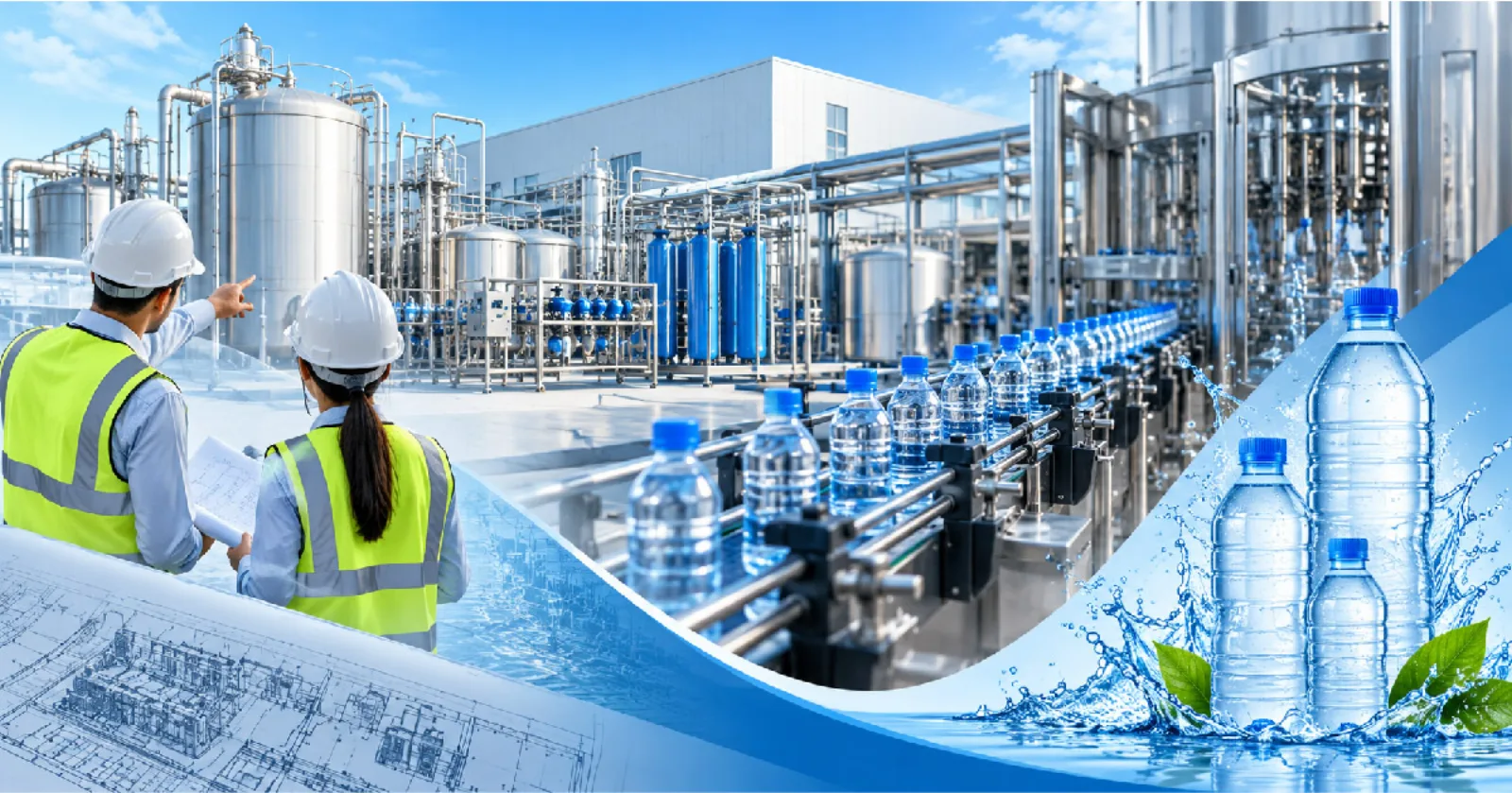
Setting up a bottled water business involves considerably more than installing a purification system and a filling machine. The source water must be suitable, treatment has to be consistent, and every stage between purification and packaging needs careful planning. Ion Exchange provides comprehensive EPC solutions for the packaged drinking water plant industry, bringing water treatment, bottling equipment, quality control and project execution together. For businesses entering this market or expanding existing capacity, that integration can help avoid expensive mistakes during installation and operation.
A bottling line may look impressive when running at full speed. But if the treatment section cannot supply enough water, or the filling line faces frequent stoppages, the investment will struggle to deliver its expected output. Getting these details right before construction begins is often more valuable than correcting them after commissioning.
Why EPC Matters in Bottled Water Projects
A water bottling initiative necessitates a combination of suppliers of different pieces of equipment, including a supplier that handles filtration and purification, as well as one that provides bottling equipment. In addition, separate teams usually deal with electrical work, installation, communications, etc. Although such arrangement could be effective, coordination proves problematic when capabilities of the equipment or its operating conditions do not fit with each other.
Engineering, Procurement and Construction (EPC) adds to facilitation of combining all these processes within the framework of a single project. Namely, the design, the choice of equipment, installation, integration, and commissioning all take place in accordance with the overall manufacturing process.
Especially important for water bottling facilities, because treatment unit is closely connected to packaging line. If there are any delays in either of the units or any of their issues arise, the output will suffer.
EPC is not advantageous just because of the fact that there are few suppliers, it is convenient because responsibilities related to the functioning of the facility are well understood.
Packaged Drinking Water and Natural Mineral Water Are Different
The terms are often used interchangeably, particularly in everyday conversations. From a production and regulatory perspective, however, they are not the same.
Packaged drinking water can be produced from suitable source water using permitted treatment processes to achieve the required finished-water quality.
Natural mineral water has different source, composition and treatment requirements. Its natural characteristics must be protected, and it cannot simply be manufactured by adding minerals to purified water.
This distinction affects the design of a mineral water plant.
A business planning to market natural mineral water must first establish that its source qualifies for that product category. Equipment selection comes after the source and product requirements are understood.
Getting the product classification wrong at the beginning can create regulatory and commercial problems later.
Start With Source Water Analysis
Before deciding which purification equipment to purchase, examine the available raw water.
Groundwater may contain hardness, iron, fluoride or elevated dissolved solids. Surface water can present challenges related to turbidity, organic matter and microbiological contamination.
Water quality can also change seasonally.
A packaged drinking water plant setup should therefore begin with representative source-water testing, an assessment of reliable water availability and a clear understanding of the intended product.
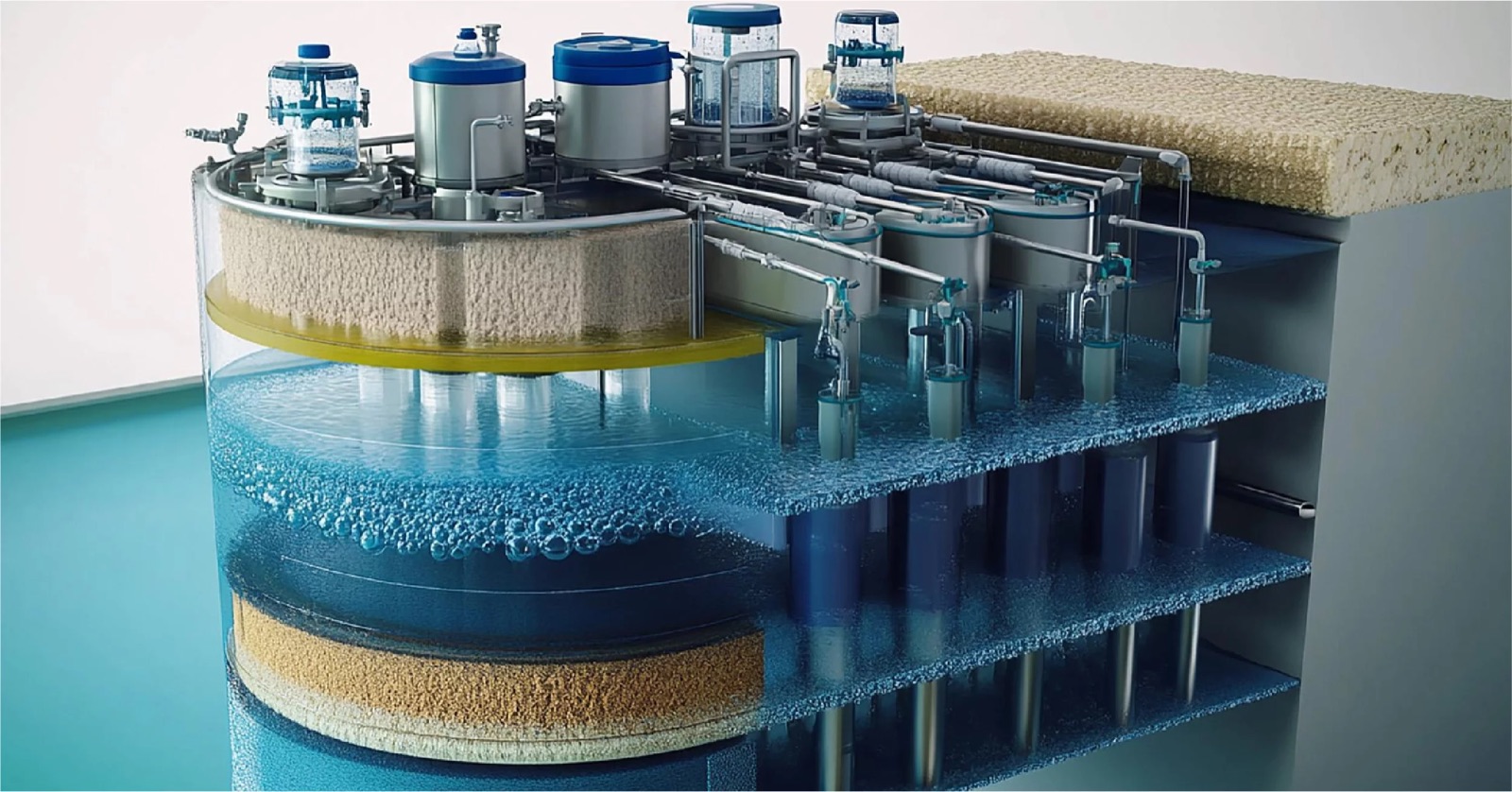
The treatment process might include filtration, activated carbon, softening, reverse osmosis, ultraviolet disinfection or ozonation, depending on the application.
But not every plant needs the same combination.
For natural mineral water, treatment options are more restricted because the product must retain the characteristics required for its classification.
The design should follow the source, not the other way around.
Treatment Capacity Must Match Bottling Capacity
Suppose a business plans a line capable of filling 6,000 bottles per hour.
It is tempting to calculate water requirements based only on the total volume going into those bottles. Actual demand is higher.
Water may also be needed for rinsing, cleaning, sanitation and other plant utilities. Treatment systems can lose water during backwashing, regeneration or membrane reject.
These requirements influence the capacity of the water treatment section.
An undersized purification plant can leave the filling line waiting for water. An oversized system may create unnecessary capital and operating expenses.
This is where EPC water treatment planning becomes valuable. The project team can balance raw water availability, treatment recovery, storage, bottling speed and utility consumption before finalising equipment capacities.
Hygiene Cannot Be an Afterthought
Water may meet the required quality at the outlet of the purification system and still become contaminated during filling.
That is why hygienic plant design deserves the same attention as treatment technology.
Treated-water storage, piping, filling machines, bottle handling and cleaning arrangements should minimise contamination risks.
Food-grade contact materials, appropriate equipment layouts, effective sanitation procedures and hygienic filling conditions all contribute to finished-product safety.
Routine microbiological and chemical testing is equally important.
A well-designed plant should make cleaning, inspection and maintenance practical for the people operating it.
If equipment is difficult to access or sanitation procedures regularly interrupt production, those problems eventually affect cost and reliability.
Bottling Equipment Needs Proper Integration
The purification plant is only one part of the operation.
A complete bottling facility may include blow-moulding equipment, bottle rinsing, filling, capping, labelling, date coding, conveyors and secondary packaging.
Each machine has its own operating speed and utility requirements.
If the filling machine runs faster than the downstream labelling or packing equipment, bottles begin accumulating. If the compressed-air supply is unreliable, blow moulding may become a bottleneck.
These problems are not always visible when equipment is purchased separately.
For a growing water bottling plant, integrated line design helps identify such constraints before installation.
It also creates a clearer basis for evaluating actual production capacity rather than relying only on individual machine ratings.
Compliance Needs to Be Built Into the Project
For manufacturers in India, packaged drinking water and natural mineral water fall under food safety regulations.
The relevant product standards include IS 14543 for packaged drinking water and IS 13428 for packaged natural mineral water.
Regulatory requirements have also changed. Mandatory BIS certification was removed under the 2024 regulatory amendment, while FSSAI introduced a prescribed testing scheme effective January 1, 2026.
This makes it important for project developers to check current licensing, testing, hygiene, product classification and labelling obligations rather than relying on older compliance checklists.
Quality assurance should not begin after production starts.
Laboratory facilities, sampling arrangements, batch records and operating procedures should be considered during plant design.
What Influences Project Cost?
The investment required for a packaged drinking water plant depends on more than daily production capacity.
Source-water quality can change the purification process. Bottle sizes and packaging formats affect equipment selection. Automation, civil work, utilities and laboratory requirements also influence the budget.
Businesses evaluating EPC solutions for mineral water plants should pay particular attention to source protection and product-specific treatment restrictions.
Operating expenses matter too.
Electricity, packaging materials, chemicals, sanitation, labour, maintenance and water losses continue throughout the plant's working life.
A lower equipment quotation may not remain economical if the line has poor efficiency or requires frequent maintenance.
How Ion Exchange Supports Turnkey Water Bottling Projects
Ion Exchange has experience in water treatment and turnkey bottled water projects, including installations for Indian Railway Catering and Tourism Corporation's Rail Neer operations.
Its packaged water project capabilities cover treatment systems, blow moulding, filling, labelling, packaging equipment and laboratory facilities.
The company also offers automation, commissioning support, operation and maintenance services, and technical assistance.
This integrated approach is particularly useful when businesses need one engineering partner to coordinate different sections of the facility.
Rather than evaluating equipment only by its individual specifications, Ion Exchange can assess how the complete production system should operate together.
For investors planning a new mineral water plant or upgrading an existing packaged water facility, that broader project perspective helps address treatment performance, production reliability and long-term operating requirements.
Conclusion: A Good Bottling Plant Begins With Good Engineering
A successful packaged drinking water plant needs more than efficient purification equipment. Source-water assessment, hygienic design, coordinated machinery, compliance planning and reliable operation all influence the finished product.
For businesses evaluating a new packaged drinking water plant setup, EPC execution can bring these decisions together before costly equipment is installed.
The same principle applies when selecting EPC solutions for mineral water plants, although natural mineral water requires particular care in source qualification and permitted treatment.
Planning a new bottled water project or expanding an existing facility? Connect with Ion Exchange to discuss integrated EPC solutions covering water treatment, bottling, commissioning and long-term plant support.
Frequently Asked Questions
1. What is included in a packaged drinking water plant setup?
A typical setup includes source-water assessment, purification equipment, treated-water storage, disinfection, bottling machinery, packaging systems, laboratory testing arrangements and essential utilities.
2. What is the difference between a packaged drinking water plant and a mineral water plant?
Packaged drinking water is treated to meet specified safety and quality requirements. Natural mineral water must meet separate source, composition and treatment requirements that preserve its recognised natural characteristics.
3. What are the benefits of EPC water treatment for bottling projects?
EPC water treatment helps coordinate design, equipment procurement, installation and commissioning. It can reduce interface problems between purification systems, utilities and bottling machinery.
4. How much does a water bottling plant cost in India?
Project cost depends on production capacity, source-water quality, treatment technology, automation, bottling speed, packaging format, civil infrastructure and quality-control requirements.
5. How do EPC solutions for mineral water plants support long-term operations?
Integrated EPC planning helps coordinate source-water requirements, treatment equipment, hygienic processing, bottling machinery and utilities. Commissioning, operator training and ongoing maintenance support can further improve reliability.